Kto poślubił Małgorzata Beaufort'ego?
John de la Pole, 2nd Duke of Suffolk ożenił się z Małgorzata Beaufort w roku. Różnica wieku wynosiła 0 lata, 7 miesięcy i 25 dni.
Edmund Tudor, 1. hrabia Richmond ożenił się z Małgorzata Beaufort roku . Margaret Beaufort miał 12 lat w dniu ślubu (12 lata, 5 miesięcy i 1 dni).
Małżeństwo trwało 1 lata, 0 miesięcy i 11 dni (377 dni). Małżeństwo zakończyło się r.
Sir Henry Stafford ożenił się z Małgorzata Beaufort roku . Margaret Beaufort miał 14 lat w dniu ślubu (14 lata, 7 miesięcy i 12 dni).
Sir Henry Stafford ożenił się z Małgorzata Beaufort w roku.
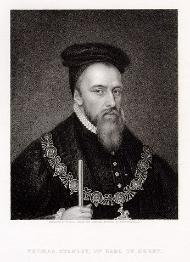
Thomas Stanley, 1st Earl of Derby ożenił się z Małgorzata Beaufort roku . Małgorzata Beaufort miał 29 lat w dniu ślubu (29 lata, 0 miesięcy i 1 dni). Thomas Stanley, 1st Earl of Derby miał 37 lat w dniu ślubu (37 lata, 4 miesięcy i 22 dni). Różnica wieku wynosiła 8 lata, 4 miesięcy i 21 dni.
Małgorzata Beaufort: Oś czasu stanu małżeństwa
1 Pixel = 1 Month

Małgorzata Beaufort

Małgorzata Beaufort (ur. 31 maja 1443 w zamku Bletsoe, zm. 29 czerwca 1509 w Opactwie Westminsterskim) – angielska arystokratka, matka króla Anglii Henryka VII Tudora, od kwietnia do czerwca 1509 regentka Anglii w imieniu wnuka Henryka VIII.
Czytaj więcej...
John de la Pole, 2nd Duke of Suffolk

John de la Pole, 2nd Duke of Suffolk, KG (27 September 1442 – 14–21 May 1492), was a major magnate in 15th-century England. He was the son of William de la Pole, 1st Duke of Suffolk, and Alice Chaucer, the daughter of Thomas Chaucer (thus making John the great-grandson of the poet Geoffrey Chaucer). His youth was blighted, in 1450, by the political fall and subsequent murder of his father, who had been a favourite of king Henry VI but was increasingly distrusted by the rest of the nobility. Although the first duke of Suffolk had made himself rich through trade and – particularly – royal grants, this source of income dried up on his death, so John de la Pole was among the poorest of English dukes on his accession to the title in 1463. This was a circumstance which John felt acutely; on more than one occasion, he refused to come to London due to his impoverishment being such that he could not afford the costs of maintaining a retinue.
As a youth, John de la Pole married twice; his first marriage was annulled, but his second marriage, to Elizabeth of York, made him the brother-in-law of two kings, Edward IV and Richard III. It brought him eleven children, the eldest of whom, John, would eventually be named heir to Richard III in 1484 and die in battle in the Yorkist cause. John de la Pole, though, generally managed to steer clear of involvement in the tumultuous events of the Wars of the Roses. Although he was politically aligned to the House of York by virtue of his marriage, he avoided participating in the battles of the 1450s, not taking up arms until Edward IV had claimed the throne. De la Pole appears to have spent much of this period, in fact, feuding with his East Anglian neighbours, the Paston family over an inheritance – even interfering in parliamentary elections, for example, in an attempt to gain the upper hand.
Suffolk did not receive major grants from Edward IV either, although de la Pole continued to support him in arms when necessary, and when Edward lost his throne in 1470, Suffolk was not trusted by the new Lancastrian regime. Suffolk fought for Edward at the battles of Barnet and Tewkesbury but did not join Edward's inner circle during his second reign. He seems to have acquiesced in the accession of Richard III in 1483, but, unlike his son, was not present for Richard III's defeat at the Battle of Bosworth two years later. Henry VII does not seem to have held Suffolk's son's treason against the duke, and even seems to have protected him from the former's attainder. John de la Pole died in 1492 and was buried at Wingfield Church, Suffolk.
Czytaj więcej...Małgorzata Beaufort
Edmund Tudor, 1. hrabia Richmond

Małgorzata Beaufort
Sir Henry Stafford
Małgorzata Beaufort
Sir Henry Stafford
Małgorzata Beaufort
Thomas Stanley, 1st Earl of Derby