Kto poślubił Marcin I Ludzki'ego?
Margaret of Prades ożenił się z Marcin I Ludzki .
Maria de Luna ożenił się z Marcin I Ludzki w roku.
Marcin I Ludzki: Oś czasu stanu małżeństwa
1 Pixel = 1 Month

Marcin I Ludzki
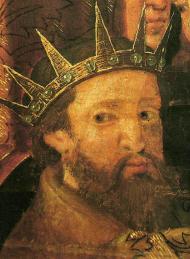
Marcin I Ludzki (ur. 29 lipca 1356, zm. 31 maja 1410), hiszp. Martín I el Humano – król Aragonii 1396-1410 z dynastii barcelońskiej, król Walencji, Majorki, Sardynii i Korsyki, hrabia Barcelony, etc., król Sycylii 1409-10 (jako Marcin II).
Urodzony 1356 w Geronie. Był młodszym synem króla Aragonii Piotra IV i jego trzeciej żony Eleonory, córki króla Sycylii Piotra II, z bocznej linii dynastii barcelońskiej. Jego starszym bratem był Jan I Myśliwy, król Aragonii.
Czytaj więcej...
Margaret of Prades
Margaret of Prades (1388/95 – 23 July 1429) was Queen of Aragon by marriage to King Martin of Aragon.
Czytaj więcej...Marcin I Ludzki
Maria de Luna
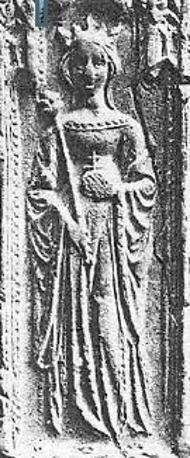
Maria de Luna (c. 1358 – 1406) was queen consort of Aragon, as the spouse of King Martin I of Aragon, from his ascension in 1396 to her death in 1406. In the early years of Martin's reign, she served as regent of Aragon while her husband tended to affairs in Sicily, a kingdom to which he also had a claim.
She was the daughter and heiress of the Aragonese noble Lope, Lord and 1st Count of Luna and Lord of Segorbe and his second wife Brianda d’Agout, an aristocratic woman from Provence. Maria was betrothed to Martin (future King of Aragon) as a child, and brought up at the court of Martin's mother, Queen Eleanor of Sicily. The couple married in Barcelona on 13 June 1372, and Maria became queen upon her husband's accession in 1396. At the time of his accession to the throne, Martin was in Sicily, so Maria acted as regent alongside Queen Dowager Violant of Bar, and Matthew, Count of Foix until Martin's return in 1397.
Maria was politically active and exerted influence upon both policy and society, and was considered by some a more talented ruler than Martin himself. She supported the poor financially, handled taxes, welcomed Jewish and Muslim refugees, attempted to end conflict between noble houses, and corresponded directly with the Avignon-based Antipope Benedict XIII (himself Aragonese) to suggest bans toward laws and practices she saw as unjust. Described as wise, just, merciful, and religious without being a fanatic, she was interested in music and literature but unimpressed by pomp and luxury.
Czytaj więcej...